
- +977-1 5914785, 5914723
- [email protected]
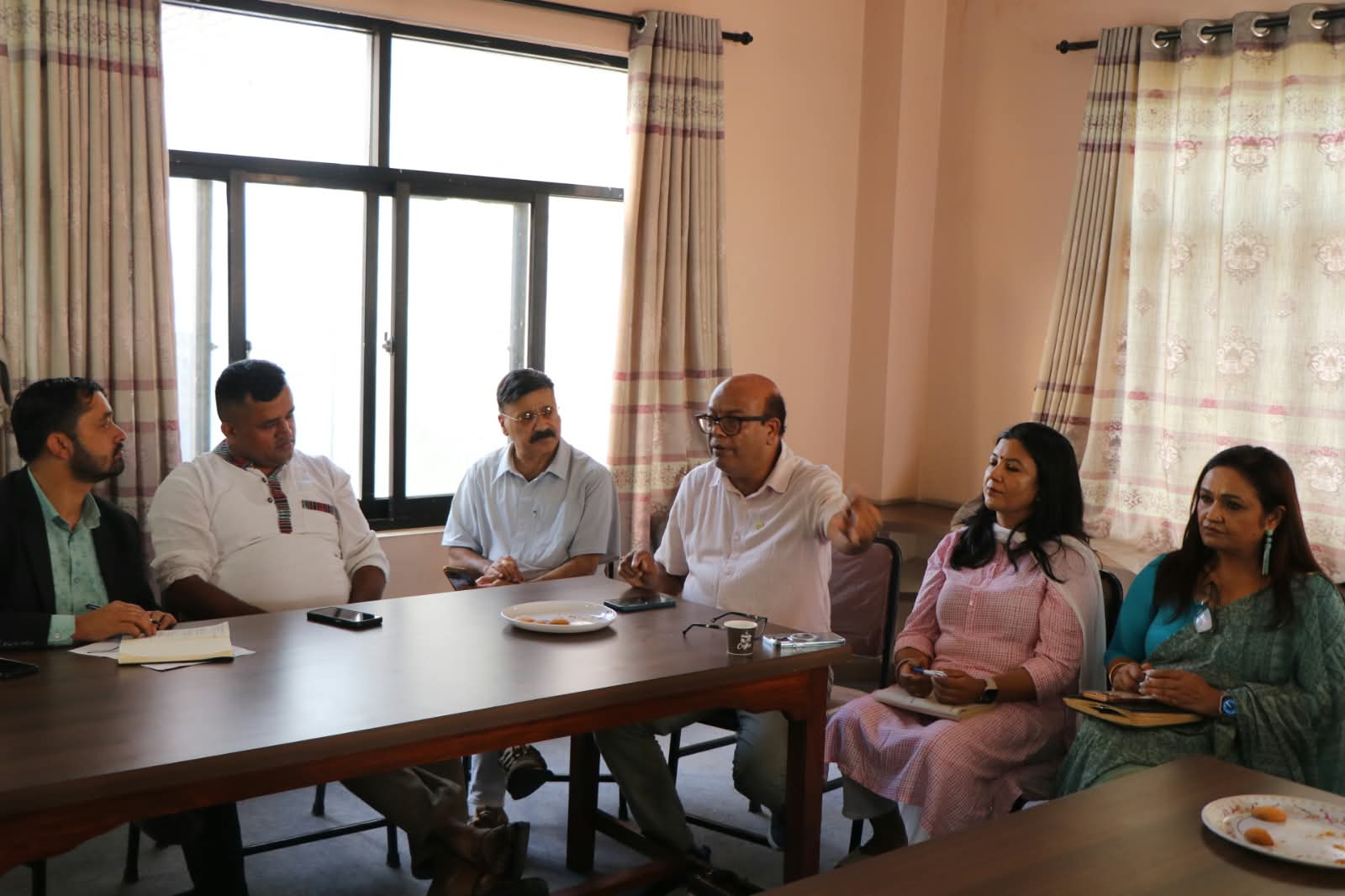
Kathmandu, September 11 The Federation of Nepali Journalists (FNJ) has begun preparations for a nationwide campaign and protest against the reduction in the amount allocated for public welfare advertisements and recent policy measures related to the media sector.
Stating that public welfare advertisements are directly linked to the continuity of small-investment, self-employed and print media outlets, the FNJ’s Self-Employment and Small-Investment Media Promotion Committee organized an interaction programme on Friday titled “Reduction in Public Welfare Advertisement Funding: Problems of Print Media and Ways Forward.”
Stakeholders participating in the programme held at the FNJ Central Office, Sanchargram, Kathmandu, said that cuts in public welfare advertisement funding would affect the continuity of small and self-employed print media publications, the employment of journalists and staff, and the overall diversity of the media sector.
FNJ President Nirmala Sharma said that the Federation had submitted an attention letter to the Minister for Communication and Information Technology at the ministry on Thursday. According to her, the letter called on the government to withdraw the cuts in public welfare advertisement funding, ensure equal treatment between private and government media, make the advertisement distribution system transparent, and remove difficulties related to media listing and registration.
President Sharma said that the FNJ’s responsibility would not end with submitting an attention letter and that suggestions from stakeholders were necessary to formulate the Federation’s future strategy. She said the programme was organized to develop a common understanding on how to engage effectively in dialogue with the government, how to strengthen the demands with facts and arguments, and, if necessary, how to move forward with pressure and protest programmes.
Dev Prakash Tripathi, Chairperson of the National Print Media Network and senior journalist, said that a situation was emerging in which journalism itself could be displaced. He said the forthcoming movement should be linked with the issue of press freedom and carried forward in phases.
Damodar Dawadi, Coordinator of the Task Force for Saving Print Media, said that the issue was directly connected with the existence of print media outlets that have been operating for decades, professional security and press freedom. He said that along with effective negotiations and dialogue with the government, a movement should be launched if necessary, under the leadership of the FNJ.
Devendra Chudal, Chairperson of the Newspapers Rights Forum, said that changing the budget approved by Parliament through a ministerial-level decision would amount to disrespecting Parliament itself. Warning that they would be compelled to take legal action if the decision was not corrected in time, he said the existence of media outlets must be protected to safeguard press freedom.
He clarified that public welfare advertisement funding was not money received by media outlets at the government’s discretion, but payment received by media organizations for publishing advertisements. Saying that newspapers across the country had been affected, he stressed the need to continue negotiations, dialogue and protest programmes.
Ganesh Pandey, Chairperson of Press Chautari Nepal, accused the government of attempting to weaken print media by cutting public welfare advertisement funding. He suggested that the FNJ should launch a joint movement encompassing online and electronic media along with print media.
Mentioning that media outlets were also facing discrimination in advertisements from government and public institutions, Pandey said the movement should be unified rather than conducted separately. He said the media sector must stand united to protect press freedom, the rule of law and democracy.
Jeevan Bhandari, Vice-President of the Nepal Press Union, said the FNJ should make the reduction in public welfare advertisement funding a major agenda and continue the movement. He said pressure programmes such as negotiations, dialogue, signature campaigns and sit-ins should be conducted, and pledged the Press Union’s full support for any movement led by the FNJ.
FNJ Vice-President Nitu Pandit said that one decision after another was being taken in ways that weakened media outlets and that all media organizations should move forward in unity. She said the FNJ was ready to lead such an effort.
Vice-President Umid Wagchan said the FNJ was an organization that moved forward according to its policies, procedures and decisions, and that the suggestions received from stakeholders would be incorporated while formulating its future strategy. He said a nationwide campaign should be launched through a strategic plan with press freedom at its centre.
FNJ Secretary Ramesh Khatriwada said the Federation was preparing to move forward nationwide on the issue of public welfare advertisements.
Senior journalist Bishwaraj Kirant, Crosscheck Monthly Editor Tank Karki, publisher and editor Hemraj Silwal, and Treasurer of the FNJ Kathmandu Chapter Ramchandra Karki, among others, said the FNJ should currently make the problems faced by print media due to the reduction in public welfare advertisement funding its main agenda.
The programme was facilitated by Rameshwor Karki, Coordinator of the FNJ’s Self-Employment and Small-Investment Media Promotion Committee and Central Committee Member.
Coordinator Karki said that discussions would now also be held with electronic and digital media, focusing on the problems faced by print media due to the reduction in public welfare advertisement funding. He said the suggestions received during the programme had provided important feedback for presenting the FNJ’s position effectively in forthcoming negotiations and discussions with the government.
He said the FNJ would continue such discussions and organize interactions with media-sector stakeholders across the country.
FNJ Central Committee Member Arjun Pant, FNJ Kathmandu Chapter Adviser Pushkar Basnet, and publishers and editors of various print media outlets were also present at the programme.